Icons as a Service
The Philistines were a people living on the coast of Canaan - thought to have settled there around the late Bronze Age. Their history intertwines with the Israelites’, and as such is extensively documented in the Old Testament. One interesting episode is the story of a battle with the Israelites detailed in 1 Samuel 4.
The Israelites, while encamped under Mount Sinai, were given elaborate instructions on constructing the Ark of the Covenant. God on building the base of it:
And they will make an ark of acacia wood, two and a half cubits its length and a cubit and a half its width and a cubit and a half its height. 11 And you will overlay it with pure gold, inside and outside you will overlay it, and you will make on it a gold molding all around. 12 And you will cast for it four gold rings, and you will put them on its four feet, with two rings on its one side and two rings on its second side..
The instructions continue with more detail, on putting cherubim on either end and the construction of an atonement cover to go on top. The stated purpose for the Ark was to represent God’s physical throne on Earth and to house the Ten Commandments, a contradiction it seems to the Second Commandment itself, forbidding the construction of any “graven image”.
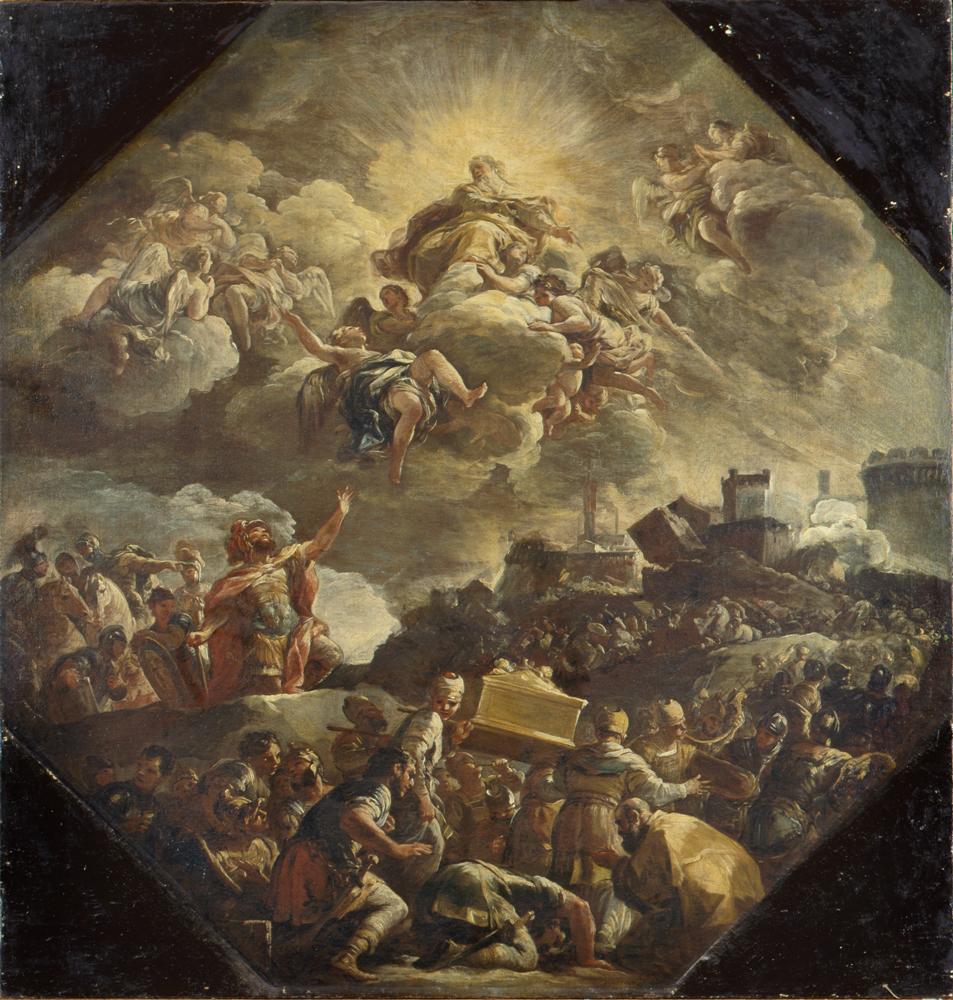
Carried for 40 years as the Israelites wandered through the desert and placed inside their Tabernacle every time they encamped, the Ark was passed and cared for from generation to generation. The Ark made several appearances throughout their history:
- During the Battle of Jericho, it was carried around the city of as trumpeteers followed it, and after the 7th day the wall of Jericho fell.
- At the Battle of Gibeah (an episode during the Benjaminite War), the Ark was given burnt offerings by the Israelites after a day of heavy losses. The Israelites succeeded on the next day.
- When the Israelites reached the bank of the River Jordan, the river grew dry as the priests at the head of the formation carrying the Ark stepped in it, allowing the people to cross.
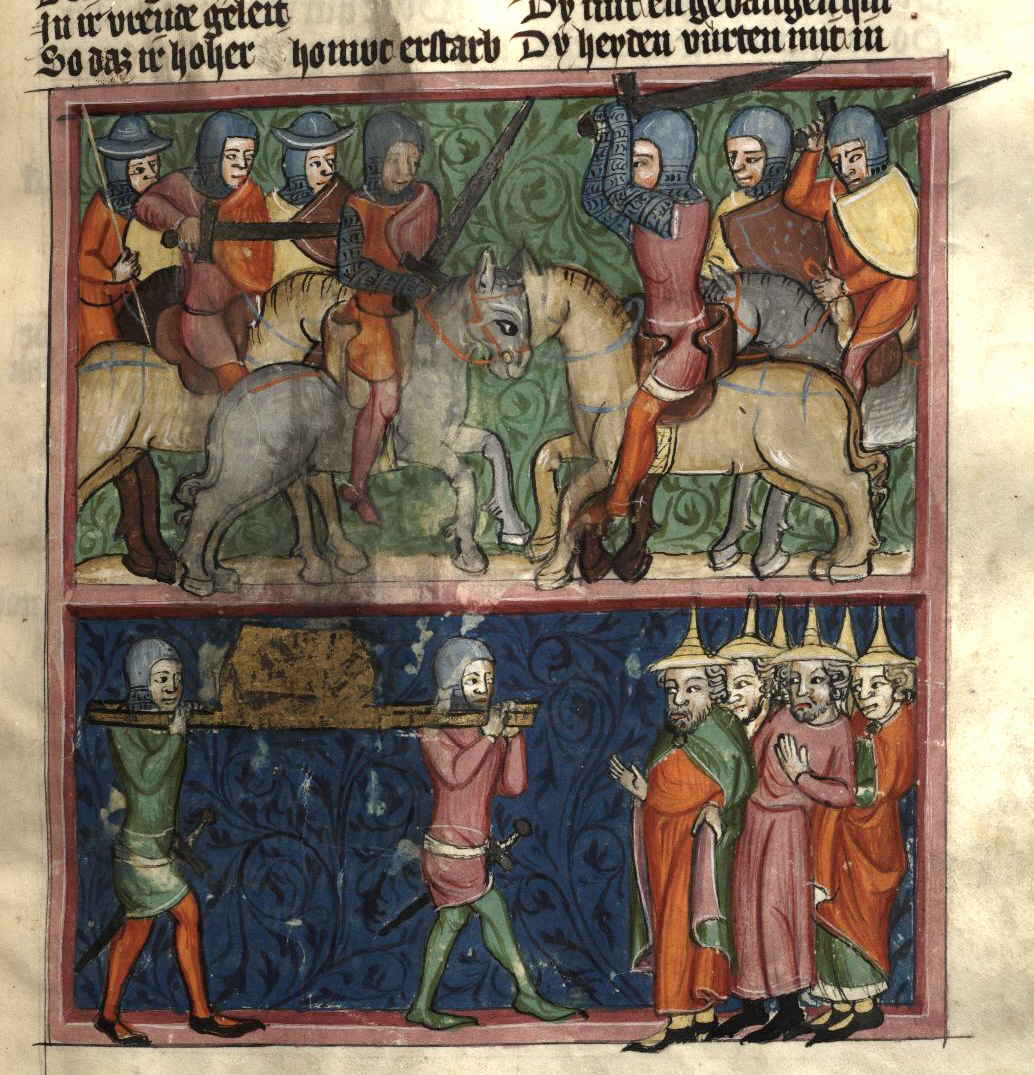
By the time of the battle between the Philistines and Israelites, the Ark had taken on a secondary purpose, here carried as a banner. The Israelites lost, and the Philistines captured the Ark to parade around their city. At each place they paraded it, misfortune befell them. At Ashdod, it was placed in the temple of Dagon, an early Syrian deity. The next morning, the statue was found prostrate in front of it. When restored, the statue was found the next day broken. The people of Ashdod were visited by a plague, until the Ark was returned to the Israelites. It continued on its journey throughout Biblical history, in the hands of King David then Solomon and so on, getting lost in history.
The Ark deviated from its original image - its primary purpose overshadowed and abstracted away by the observed phenomena. The creators themselves were affected by the runaway nature of its purpose. The Ark, an image, was used as a weapon but misunderstood by both the Israelites and Philistines.
What the Israelites and Philistines encountered with the Ark then I think is not too dissimilar to the angelization I bring up in an earlier post. Images function much the same then as how algorithmic modeling of humans flattens a dimension out.
The Second Commandment exists I think to prevent the runaway repurposing and abstracting of the real by forbidding the creation of these secondary representations or truths. You see this repeated across religions and cultures. The classic example is the depiction of Mohammad in Islam, but the Catholic Church also went through this debate when Emperor Leo III banned religious icons in 726, arguing that depicting Christ either divided his divine and human natures or, worse, only captured the human.
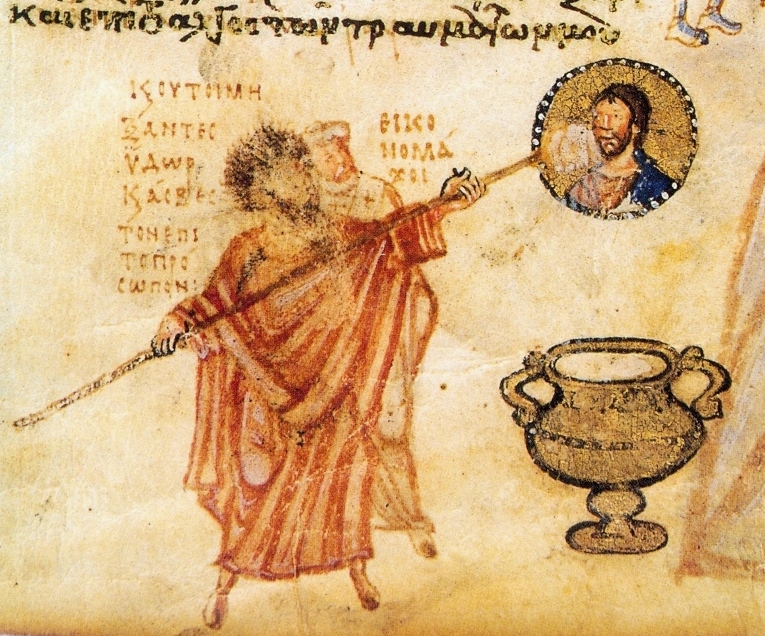
The Iconodules countered that Christ’s incarnation justified images, since God had already made himself visible in flesh.
Iconoclasm
The destruction of religious imagery happens often enough in history to be called iconoclasm - Greek for icon + break (the above episode in Byzantine history is referred to as the Byzantine Iconoclasm. Interestingly the opposite (mentioned above) is iconodule, Greek for icon + slave.
Since we’re talking about images, it’s worth digging into some loose classifications for support of iconoclasm I’ve been thinking through.
Structural
Plato made a structural argument against icons, by banning poets and painters in his idealized Republic. Platonic Realism holds that the ideas, symbols and concepts of things in our collective understanding of the world hold real representations somewhere in the universe - therefore everything in the physical world is an imitation of some pure Form. A painting of a bed is an imitation of a physical bed which is an imitation of the abstract Form of a bed.
“… the imitative poet implants an evil constitution, for he indulges the irrational nature which has no discernment of greater and less, but thinks the same thing at one time great and at another small — he is a manufacturer of images and is very far removed from the truth.”
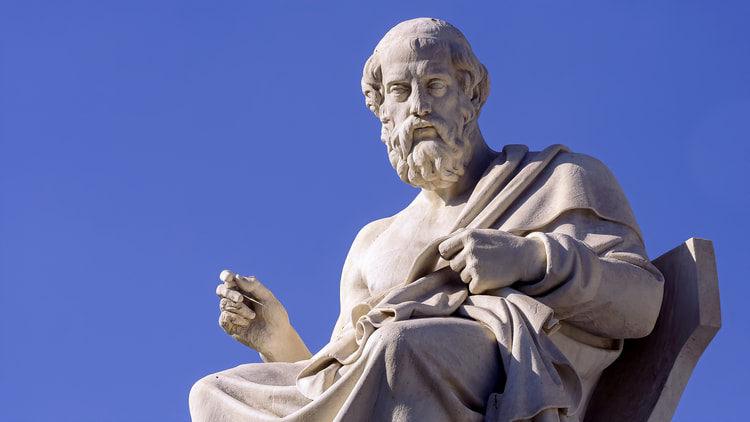
The ban on painters and poets in the Republic is then a ban on secondary representations, which Plato feared would result in misrepresentations being taken for truth.
Collective
Islam’s prohibitions on images derive from Tawhid, or Oneness. It’s anathema to assign anything else divinity, leading to an uncompromising monotheism. The prohibition then around images (really idolatry) is called Shirk, which means both idolatry and “partnerism” or association with God. This is the highest sin in Islam:
Indeed, Allah does not forgive associating others with Him, but forgives anything else of whoever He wills. And whoever associates others with Allah has indeed committed a grave sin.
Parts of Sufism also associate free will with Shirk, as it results unconsciously in the production of secondary representations (i.e as you unconsciously assign an image to God when you think of them). And so the fear of Shirk is the fear of category confusion in the collective; violating Tawhid.
John Calvin (of Calvin & Hobbes fame) in the Institutes makes a similar claim:
“The human mind, stuffed as it is with presumptuous rashness, dares to imagine a god suited to its own capacity; as it labours under dullness, nay, is sunk in the grossest ignorance, it substitutes vanity and an empty phantom in the place of God.”
… we may infer that the human mind is, so to speak, a perpetual forge of idols."
Capacity
When Calvin says “dares to imagine a god suited to [our] own capacity”, the fear is of capturing the fullness of the Form/Ideal/Divinity that we’re seeking to represent, and unwittingly misrepresenting; leading to confusion.
Maimonides sets up a similar scenario: someone has heard of the elephant, and knows that it is an animal, and wishes to know its form and nature. A person, who is either misled or misleading, tells him it is an animal with one leg, three wings, lives in the depth of the sea, has a transparent body: its face is wide like that of a man, has the same form and shape, speaks like a man, flies sometimes in the air, and sometimes swims like a fish.
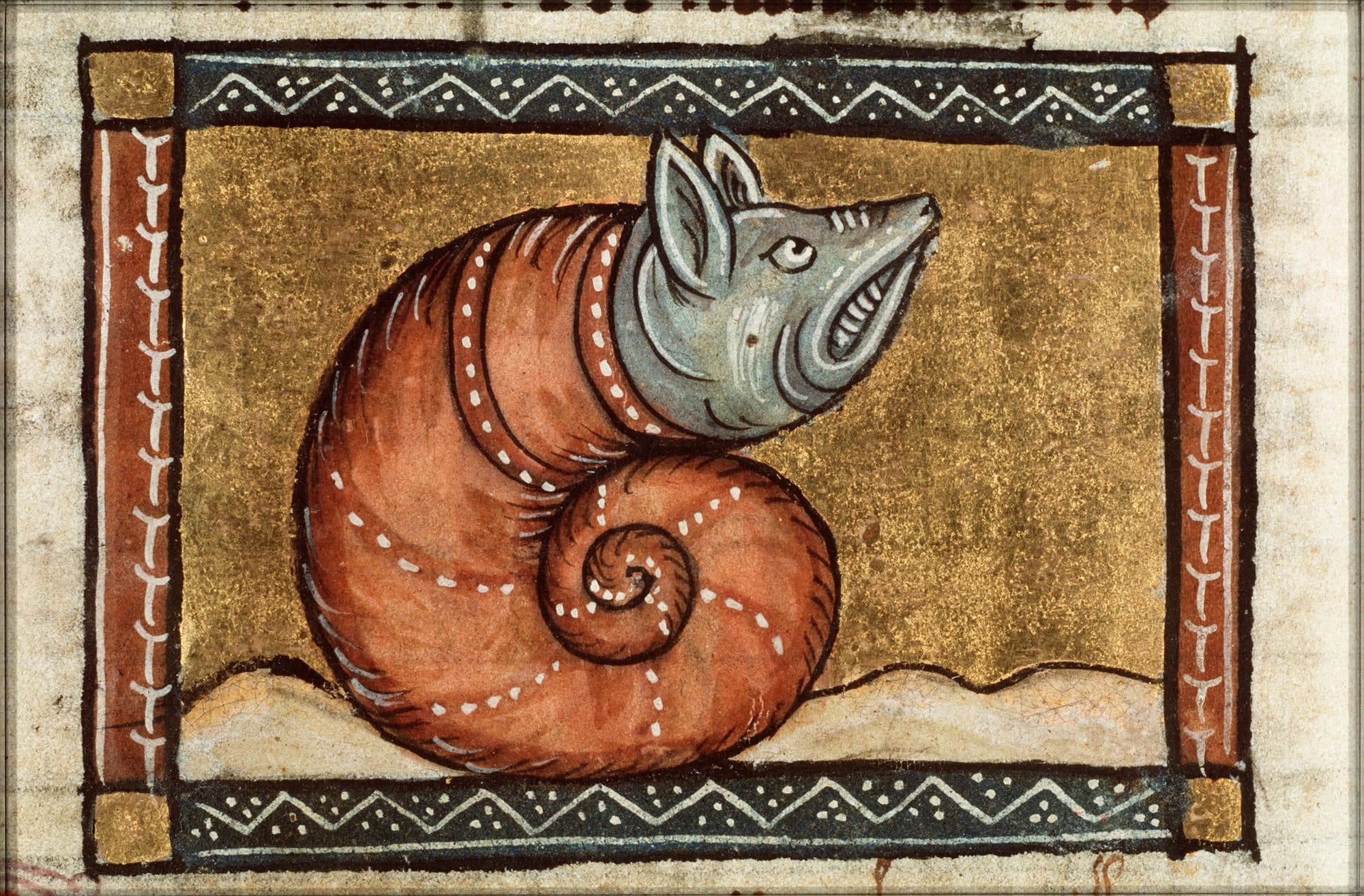
The image of the elephant then becomes a runaway object, and distorts the True form, occupying its space in collective thought. This was the main motivation behind Byzantine Iconoclasm as well, that there was no way for a human to render in the physical world the Divine.
Icons as a Service
Most frontier labs now offer image generation in their free tier, allowing anyone to quickly produce an image with a prompt. If you hold iconoclastic views, this can feel like the terminus, although in hindsight it’s the point we’ve been marching towards all along as the mediums and techniques of representation evolved. Calvin’s mind forge is now fully externalized, mechanized and connected to others. A thought, formed nowhere (either embodied in a human or disembodied by an agent), immediately projected into an image; the image immediately loose in the world, already indistinguishable from what it was trying to resemble.
Notes
- John Calvin and the Visual Arts: Dueling Cavaliers? is where I learnt about Calvin’s iconoclasm.
- The Wikipedia entry on Byzantine Iconoclasm has a great section on arguments for and against icons: https://en.wikipedia.org/wiki/Byzantine_Iconoclasm#Arguments_in_the_struggle_over_icons.
- The oldest case of Iconoclasm I could find was Akhenaten’s eradication of Ancient Egypt’s Old Gods in favor of the Sun God Aten. From Jan Assmann (cribbed from the Iconoclasm wiki):
For Egypt, the greatest horror was the destruction or abduction of the cult images. In the eyes of the Israelites, the erection of images meant the destruction of divine presence; in the eyes of the Egyptians, this same effect was attained by the destruction of images. In Egypt, iconoclasm was the most terrible religious crime; in Israel, the most terrible religious crime was idolatry.
- I can’t seem to stop talking about Deleuze. In Anti-Oedipus, Deleuze and Guatierri introduce deterritorialization (and reterritorialization, which happens immediately after) - where a concept or idea is decoupled, mutated or destroyed; and a new object with no link to the original takes its place.
- I can’t seem to stop talking about Baudrillard either. Baudrillard explores the concept of hyperreality, and cites Borges’ On Exactitude in Science. It describes an empire where cartography becomes so precise you can make a 1:1 map, but as the map itself degrades, so does the world underneath it. Baudrillard uses this to develop hyperreality, where signs and symbols deviate through differing notions of reality, leading to no clear distinction about where reality ends and fiction begins as they continuously self-generate.
Hollywood is a pioneer in this space, distorting history in post. As an aspiring gaucho, I’d like to use Wyatt Earp’s gunfight at the O.K Corral as an example. A 30 second shootout in 1881 transformed by Stuart Lake’s fictional autobiography of Earp as a noble lawman transformed by My Darling Clementine (1946) into Gunfight at the O.K Corral (1957) into Tombstone (1993).