This April, I co-read Philip K Dick’s VALIS and Gene Wolfe’s Book of the New Sun (including Urth of the New Sun). I ended up doing so purely by coincidence, needing multiple breaks in between Wolfe’s books, and so randomly interleaving multiple others while I worked through BoTNS.
A side effect of the back and forth was spending more time mulling over the overlapping themes, and so when I read or dreamt, the books would seep into each other. Fortunately the interference was constructive, and I kept coming back to the use and symbols around memory, amnesia and anamnesia in the books.
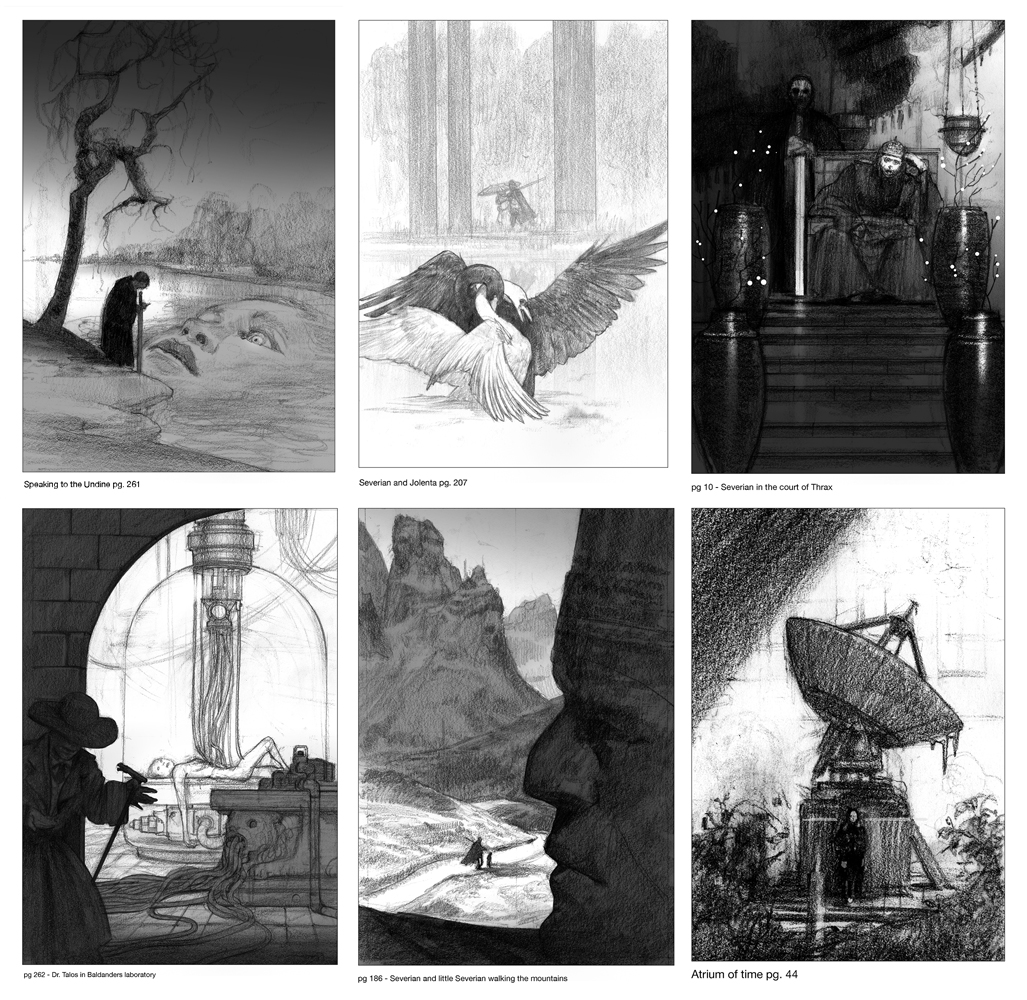
Book of the New Sun
The Book of the New Sun series follows Severian’s journey as a torturer through a strange landscape estimated to be a couple thousand years into our future. It’s filled with allegories to myth, literature and religion, and in a lot of senses hard to dissect without some familiarity with those topics.
Wolfe was a Catholic, and the books are laced with beautiful religious imagery. There are references to gnostic deities (like the Heirodules or Tzadkiel), Kabbalah (via Yesod, where Severian travels eventually) and more.
VALIS
VALIS emerged near the end of Philip K. Dick’s life as part autobiographical accounting of some of his religious experiences and part weird conspiracy plot on top.

PKD’s end years are incredibly interesting and tragic. A more detailed accounting can be found in the Exegesis of Philip K Dick. VALIS is like Exegesis-lite and frames his theophanies as delivered by an orbiting satellite via a beam of pink light. The visions themselves are a reflection of PKDs own interests, from religion to philosophy to science. The Wikipedia entry has a detailed list of the many cultural references: from Xenophanes, Heraclitus and Plato to Pascal, Jung and Freud.
Here’s PKD remembering the catalyst for his religious experiences and visions:
In that instant, as I stared at the gleaming fish sign and heard her words, I suddenly experienced what I later learned is called anamnesis—a Greek word meaning, literally, “loss of forgetfulness.” I remembered who I was and where I was. In an instant, in the twinkling of an eye, it all came back to me. And not only could I remember it but I could see it. The girl was a secret Christian and so was I. We lived in fear of detection by the Romans. We had to communicate with cryptic signs. She had just told me all this, and it was true.
Gnosis
Gnosis is defined as a spiritual truth. Gnosis in some cases (especially in the context of gnosticism) can be interpreted as a regaining of knowledge (or a restoration of memory) - implying some past loss that is the current source of our ills, misfortunes or unhappiness. Similarly in Buddhism, Dzogchen teachings have the basic ground or primordial mind that once did exist and through practice (or gnosis) we re-achieve, shedding the unhappiness (or dukkha) in the process.
Tying VALIS and BoTNS together is this quote in the former with a discussion of gnosis and anamnesia in Dante’s Divine Comedy:
The techniques are there. Dante discusses them in the Comedy. It has to do with the loss of amnesia, when forgetfulness is lost, true memory spreads out backward and forward, into the past and into the future, and also, oddly, into alternate universes; it is orthogonal as well as linear.
In the Divine Comedy, Dante meets Matelda, who immerses him in the river Lethe, which washes away memory of sin. He then drinks from the river Eunoe, which restores memory of good deeds. Both are performed in preparation of entrance to Paradise.
Lethe in Greek literally means forgetting, and is also known as Ameles Potamos, or the river of unmindfulness. Eunoe is a word of Dante’s own creation, a neologism meaning good (eu) mind (noe). There’s a fantastic interview with Professor Fabio Cerquera on memory in ancient myth. Cerquera brings up the dual nature of the twin rivers of Hades, Lethe (the river of amnesia) and Mnemnosyne (the river of anamnesia).
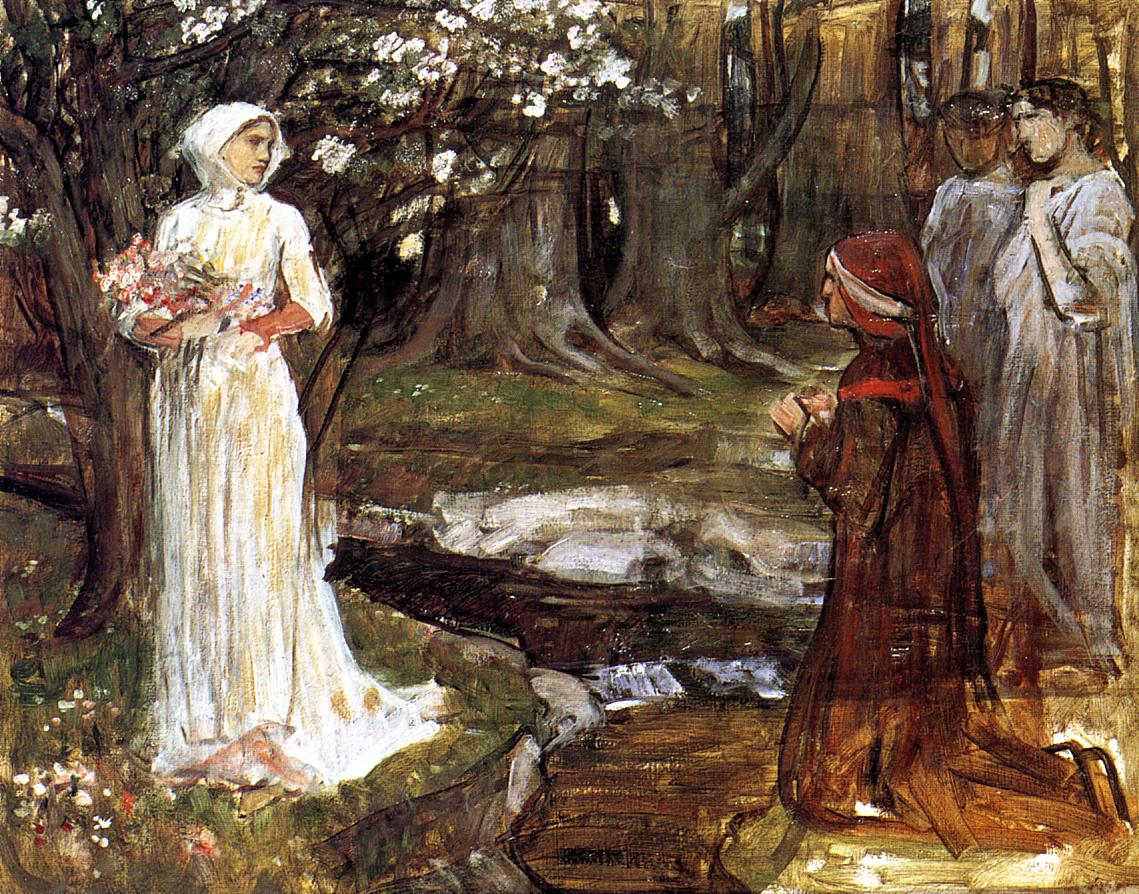
Dante drinking from both then implies a dualistic nature to gnosis. In BoTNS, Severian almost drowns at the beginning; undergoing the first phase. Severian achieves true gnosis by the end of the series by ingesting the combined memories of the Autarchs before him. I think Wolfe was intentionally referencing Dante in parts of Severian’s journey, also given the importance of the Undines - water beings that equally guide and thwart him.
Cerquera mentions drinking from each river are two different kinds of death, Lethe grants death of the individual and Mnemnosyne death of forgetting.
Another element of the dual nature is in the difference between individual memory and societal memory. Gnosis of the truth of the world is obscured, and VALIS beams theophanies straight into PKD’s brain to reveal it.
Finally, both books deal with the theme of false gnosis, or only completing one part of the ritual. In BoTNS, the Alzabo is a creature that gains the memories of humans it ingests, and by consuming the Alzabo others gain the collective memory. Vodalus and his crew of rebels possess incomplete truths about the world, having only partaken in individual gnosis. Severian transcends by consuming the Alzabo of the collective. Synthesis between the individual and the collective satisfies true gnosis.
Similarly in VALIS, others (like Sophia) are false providers of gnosis, having partial revelations or misinterprations of the world.
On amnesia of the collective, we have this exegesis from VALIS:
We did it voluntarily, were we such good builders that we could build a maze with a way out but which constantly changed so that, despite the way out, in effect there was no way out for us because the maze - this world - was alive? To make the game into something real, into something more than an intellectual exercise, we elected to lose our exceptional faculties, to reduce us an entire level. This unfortunately included loss of memory, loss of knowledge of our true origins.
Assorted Notes
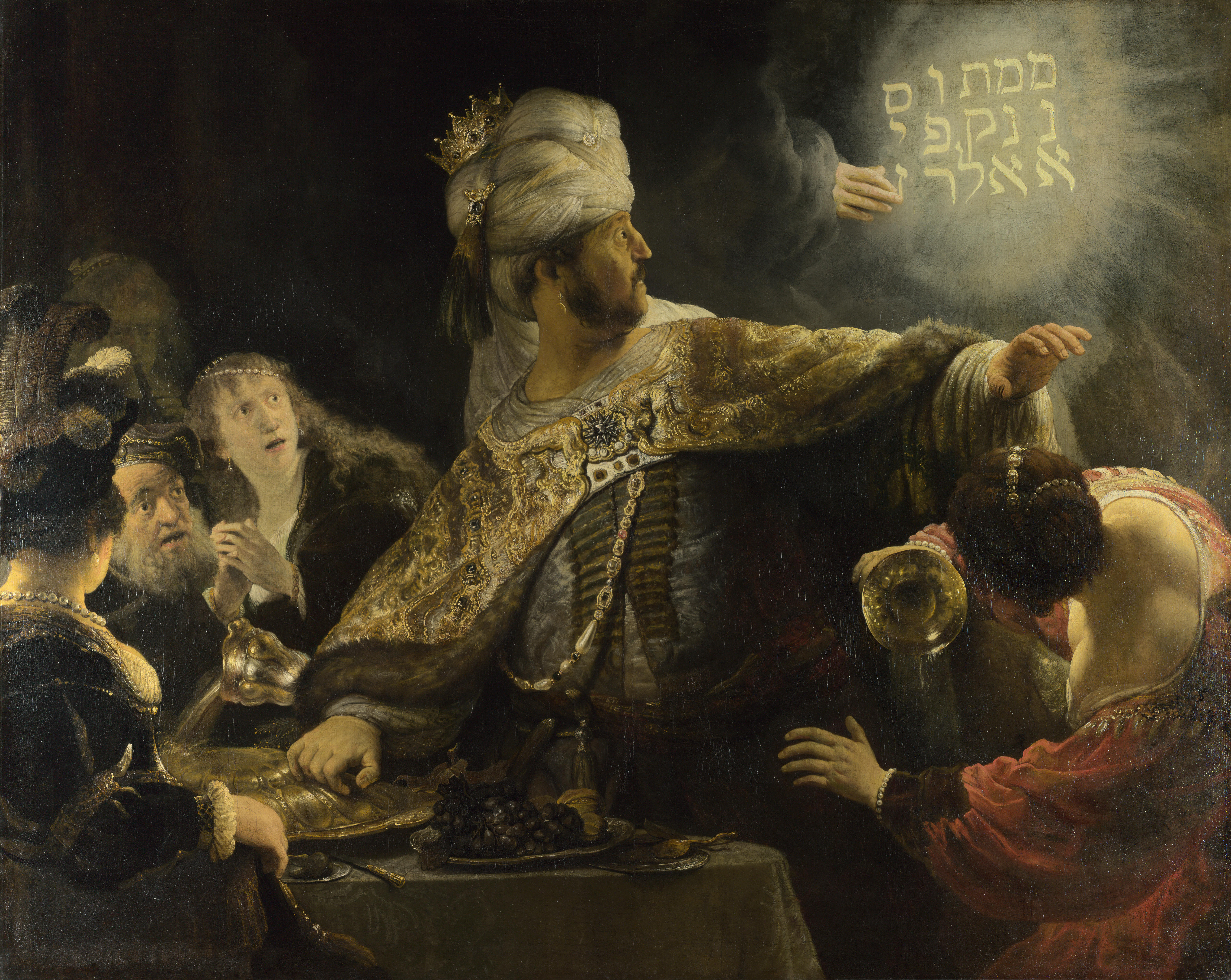
- While not a theophany, I think of Belshazzar’s Feast by Rembrandt every time I see the word.
- Again plugging the memory in myth interview w/ Professor Cerquera here. I don’t do the theme justice in this post, but he definitely does.
- Orphic cults were ancient Greek religions centered around Orpheus and his journey to the underworld. This Orphic hymn to Mnemnosyne celebrates memory:
Free from th’ oblivion of the fallen mind, By whom the soul with intellect is join’d: Reason’s increase, and thought to thee belong, All-powerful, pleasant, vigilant, and strong: Tis thine, to waken from lethargic rest All thoughts deposited within the breast; And nought neglecting, vigorous to excite The mental eye from dark oblivion’s night.
- Another great read that touches on the themes of individual and collective memory in Book of the New Sun: https://liviajelliot.com/blog/2024/16-podcast-shadow-and-claw.
- I listened to Bryan Van Norden on a podcast recently where he explained the importance of looking at other non-European philosophical and mythological traditions. It’s forced me to do some more research into other aspects of the memory, gnosis and water themes above, which yielded the following:
- In Buddhism, regaining dharma is equivalent to learning the true or ultimate nature of reality.
- In Hinduism, memory (smriti), intelligence and water are linked via various hymns in Vedic scripts. This is an interesting read on the role of water in Hinduism.
- In Taoism, water allows one to “forget the self” and merge with the original, recollecting one’s true nature. Here’s an interesting read on the Wisdom of Water in Chinese Philosophy.